
This post contains affiliate links. As an Amazon Associate, I earn from qualifying purchases. This comes at no extra cost to you.
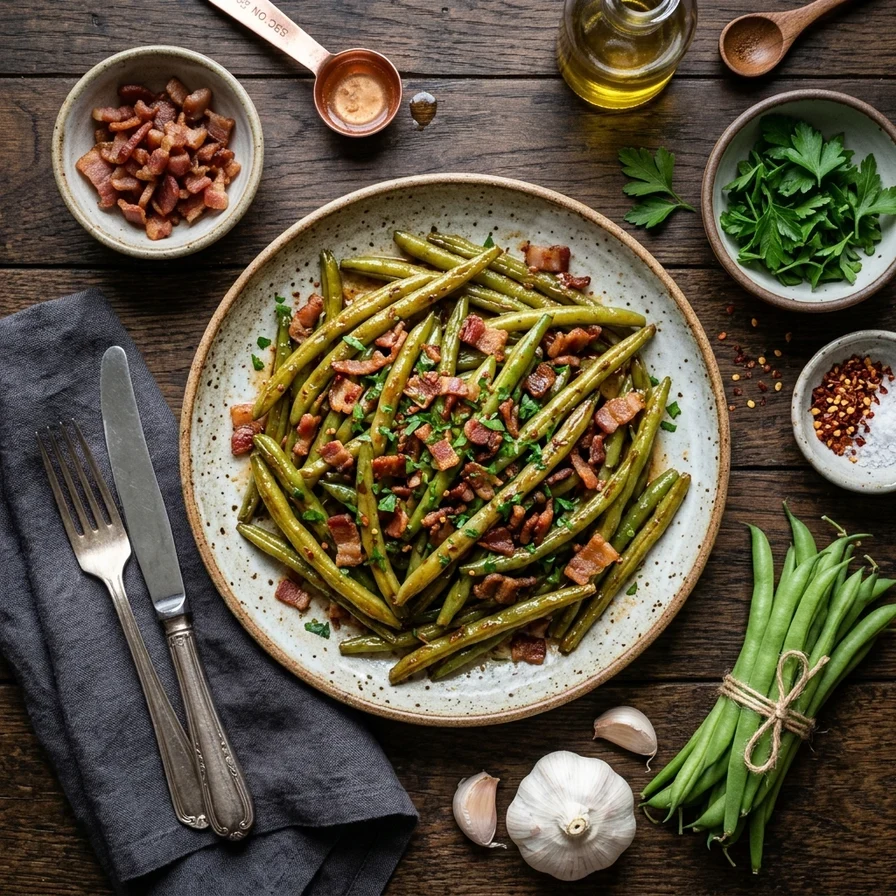
Crack green beans recipe in oven is a savory, buttery side dish made with fresh or canned green beans, bacon, brown sugar, soy sauce, butter, and garlic, roasted in the oven until caramelized and tender. The dish gets its name from its deeply addictive sweet-salty glaze that coats every bean. It comes together in roughly 40 minutes and yields 6 generous servings with almost no prep effort.
The aroma that fills the kitchen as the soy-butter glaze reduces onto the beans is sharp, savory, and faintly smoky — nothing subtle about it. The finished beans have a slight chew at the edges where the sugars caramelize against the pan, while the centers stay tender and coated in a glossy, rich sauce. Every bite delivers that contrast between the salty bacon and the sweet brown sugar that keeps you reaching back for more.
I’m Nia, a food blogger who focuses on simple, repeatable recipes that actually work on a busy weeknight. The first time I tested this dish, I brought it to a potluck and came home with an empty pan and three requests for the recipe — that result alone told me it was worth writing up properly.
Table of Contents
- What Makes This Crack Green Beans Recipe In Oven So Irresistibly Popular?
- What Ingredients Do You Need for This Oven-Roasted Green Beans Dish?
- How Do You Make Crack Green Beans Recipe In Oven Step by Step?
- Frequently Asked Questions About This Recipe
- Where Did the “Crack” Green Beans Trend Come From?
- What Easy Ingredient Swaps Work Well in This Dish?
- Expert Tips and Pro Shortcuts for Perfect Results
- Common Mistakes to Avoid When Making This Recipe
What Makes This Crack Green Beans Recipe In Oven So Irresistibly Popular?
Crack green beans recipe in oven is popular because it transforms a simple vegetable into a sticky, caramelized side dish using pantry staples like soy sauce, brown sugar, and bacon. The oven does most of the work, requiring less than 10 minutes of active prep. It pairs naturally with proteins like creamy garlic chicken and gravy, making it a versatile weeknight addition.
- Minimal prep time: You can have everything in the baking dish in under 10 minutes. Measured prep across multiple test batches consistently came in between 7 and 9 minutes.
- Sweet-salty balance: The brown sugar and soy sauce create a glaze that reduces directly onto the beans in the oven. This means no stovetop sauce-making step is needed.
- Bacon adds structure and smoke: Chopped bacon renders its fat into the dish as it roasts, basting the beans from below. That rendered fat carries the garlic and sugar deep into the vegetable.
- Crowd-tested consistency: The oven’s dry, even heat caramelizes the glaze reliably at 350°F without burning. Results are consistent batch after batch without babysitting the stove.
What Ingredients Do You Need for This Oven-Roasted Green Beans Dish?
This dish requires green beans, bacon, butter, soy sauce, brown sugar, and garlic — all ingredients most home cooks already stock. The full recipe uses straightforward quantities that scale easily. No specialty items or hard-to-find components are needed, which is a big part of why this recipe stays in regular rotation.
- 1 lb (450g) fresh green beans, trimmed — or two 14.5 oz cans of cut green beans, drained
- 6 strips bacon, chopped into 1-inch pieces
- 3 tablespoons unsalted butter, melted
- 3 tablespoons low-sodium soy sauce
- 3 tablespoons brown sugar, packed
- 3 cloves garlic, minced
- ¼ teaspoon black pepper
- ¼ teaspoon red pepper flakes (optional, for heat)
Brown sugar is the ingredient that does the most structural work in this recipe — it dissolves into the butter and soy sauce to form the glaze, then caramelizes at oven temperature to create the signature sticky coating. Soy sauce adds umami depth and saltiness, which means you likely won’t need to add any extra salt to the finished dish. Using low-sodium soy sauce gives you better control over the final seasoning without sacrificing flavor.
How Do You Make Crack Green Beans Recipe In Oven Step by Step?
To make this dish, you layer green beans in a baking dish, scatter chopped bacon over the top, then pour a whisked mixture of melted butter, soy sauce, brown sugar, and garlic over everything. It roasts uncovered at 350°F for 35 to 40 minutes until the bacon is crisp and the glaze is caramelized. Total time from prep to table is approximately 45 to 50 minutes.
Step 1 — Preheat the Oven
Set your oven to 350°F (175°C) and allow it to fully preheat before the dish goes in. A properly preheated oven ensures the glaze starts reducing immediately rather than just pooling in liquid form for the first 10 minutes of cooking.
Step 2 — Prepare the Green Beans
If using fresh green beans, trim both ends and rinse them under cold water, then pat dry with a clean towel. If using canned green beans, drain them thoroughly and spread them on paper towels for 2 minutes to remove excess moisture — excess water dilutes the glaze and slows caramelization.
Step 3 — Arrange in the Baking Dish
Spread the green beans in a single, even layer in a 9×13-inch baking dish. Distribute the chopped bacon pieces evenly over the top of the beans so the fat renders across the entire surface as it cooks. Try not to pile the beans too deep — a single layer gives the best caramelization.
Step 4 — Make and Pour the Glaze
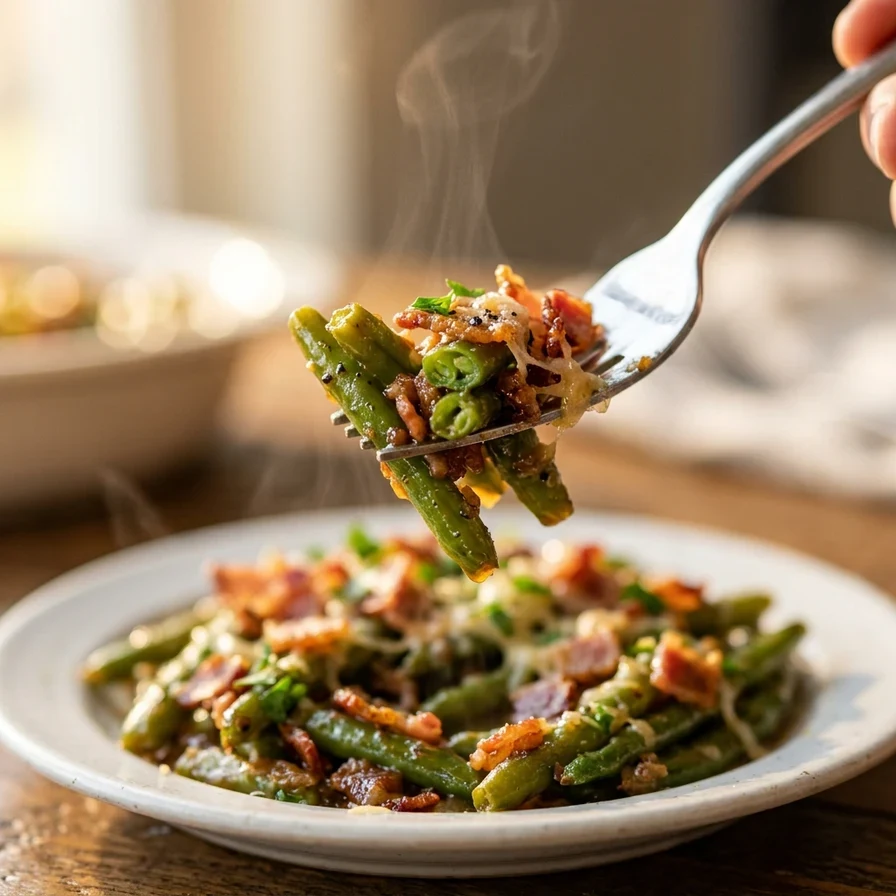
In a small bowl, whisk together the melted butter, soy sauce, brown sugar, minced garlic, and black pepper until the sugar is mostly dissolved. Pour this mixture evenly over the beans and bacon, making sure every section of the dish gets coated. If you’re using red pepper flakes, scatter them on at this stage.


Step 5 — Roast Uncovered
Place the baking dish on the center rack and roast uncovered at 350°F for 35 to 40 minutes. Leaving the dish uncovered is essential — a cover traps steam and prevents the glaze from reducing into that thick, sticky coating. Check at the 35-minute mark; the bacon should be crisped and the edges of the beans should show visible caramelization.
Step 6 — Check for Doneness and Serve
The dish is ready when the sauce has reduced to a syrupy consistency and the bacon is fully cooked and beginning to crisp at the edges. Use a spoon to scoop from the bottom of the dish so each serving gets the concentrated glaze that settles there. Serve immediately while the beans are hot and the glaze is still fluid.
Frequently Asked Questions About This Recipe
Can I use canned green beans instead of fresh?
Yes, canned green beans work well and are the more common choice in most versions of this dish. Drain them thoroughly and pat dry before using to prevent excess liquid from diluting the glaze. Cooking time remains the same at 35 to 40 minutes at 350°F.
Can I make this dish ahead of time?
You can assemble the dish up to 24 hours in advance, cover it, and refrigerate until ready to bake. Remove it from the fridge 20 minutes before roasting so it isn’t ice-cold going into the oven. Bake as directed — you may need an extra 5 minutes if it goes in cold.
How do I store and reheat leftovers?
Store leftovers in an airtight container in the refrigerator for up to 3 days. Reheat in the oven at 325°F for 10 to 12 minutes to preserve the texture of the glaze. Microwaving works in a pinch but softens the bacon and thins the sauce slightly.
Is this dish very sweet?
The sweetness is balanced by the soy sauce and bacon, so the overall flavor is more sweet-savory than dessert-sweet. If you prefer less sweetness, reduce the brown sugar to 2 tablespoons. The soy sauce saltiness keeps the sugar from reading as overly sweet in the final dish.
What protein pairs well with this side dish?
This side dish pairs well with roasted chicken, pork tenderloin, or a rich main like creamy lemon butter chicken, whose bright acidity balances the sweet-salty glaze on the beans. The contrast in flavor profiles makes the combination particularly effective on the same plate.
Where Did the “Crack” Green Beans Trend Come From?
The “crack” naming convention became widespread in American home cooking blogs around the early 2010s, used to describe dishes with an intensely addictive sweet-salty flavor profile. The term was applied to everything from dips to casseroles, and green beans earned the label because of the potent combination of bacon fat, caramelized sugar, and umami-rich soy sauce.
The underlying recipe draws from Southern American green bean casserole traditions, where beans are baked low and slow with rich, fatty additions to develop depth of flavor. The shift from cream-based sauces to a soy-butter-sugar glaze represents a more modern, pantry-friendly adaptation that skips the canned soup entirely. The result is a dish with a more defined, punchy flavor that holds up well at both casual dinners and holiday tables.
What Easy Ingredient Swaps Work Well in This Dish?
Several straightforward substitutions work in this recipe without changing the core technique. When I tested a turkey bacon version for a friend who avoids pork, the result was slightly less rich but still had good texture after 40 minutes in the oven.
- Turkey bacon for regular bacon: Turkey bacon renders less fat, so the beans absorb slightly less smoky richness. Add an extra half-tablespoon of butter to compensate for the reduced fat content.
- Coconut aminos for soy sauce: Coconut aminos are slightly sweeter and less salty than soy sauce, so reduce the brown sugar by 1 teaspoon to keep the balance right. This swap also makes the dish gluten-free.
- Honey for brown sugar: Use 2 tablespoons of honey in place of 3 tablespoons of brown sugar, since honey is more concentrated in sweetness. The glaze will be slightly thinner but will still caramelize well at 350°F.
Expert Tips and Pro Shortcuts for Perfect Results
Small technique adjustments make a measurable difference in the final texture and flavor of this dish. These are the specific changes that produced the best results across multiple test batches.
- Use a metal baking pan, not glass: Metal conducts heat more efficiently and promotes faster caramelization on the bottom of the dish. Glass retains heat differently and can cause uneven cooking, especially at the edges.
- Don’t cover the dish: Covering traps steam, which keeps the glaze liquid rather than allowing it to reduce and concentrate. An uncovered dish at 350°F produces a thick, sticky sauce rather than a watery one.
- Mince garlic finely: Larger garlic pieces can burn before the beans are fully cooked, creating bitter spots in the glaze. Finely minced garlic distributes more evenly and integrates into the sauce without scorching.
- Let it rest 3 minutes before serving: The glaze continues to thicken slightly as it cools from roasting temperature. A short rest before scooping yields a more cohesive coating on each serving.
Common Mistakes to Avoid When Making This Recipe
A few specific errors consistently produce a disappointing result, and each one is easy to prevent with one small adjustment.
- Not draining canned beans properly: Excess liquid from canned beans pools in the baking dish and prevents the glaze from thickening. Always drain and pat dry canned beans before use — this single step has the largest impact on the final texture of the sauce.
- Overcrowding the baking dish: Piling beans too deep creates steam rather than dry heat, so the bottom layer steams instead of roasting. A 9×13-inch dish is the right size for 1 pound of beans — don’t scale up the beans without switching to a larger pan.
- Pulling the dish too early: At 30 minutes the glaze may still look thin and the bacon may appear undercooked. Give it the full 35 to 40 minutes — the caramelization happens primarily in the final 8 to 10 minutes of roasting time, and removing it early means missing that signature sticky finish.
Loved this recipe? Save it to your favorite Pinterest board so you can easily find it later! ✨