
This post contains affiliate links. As an Amazon Associate, I earn from qualifying purchases. This comes at no extra cost to you.
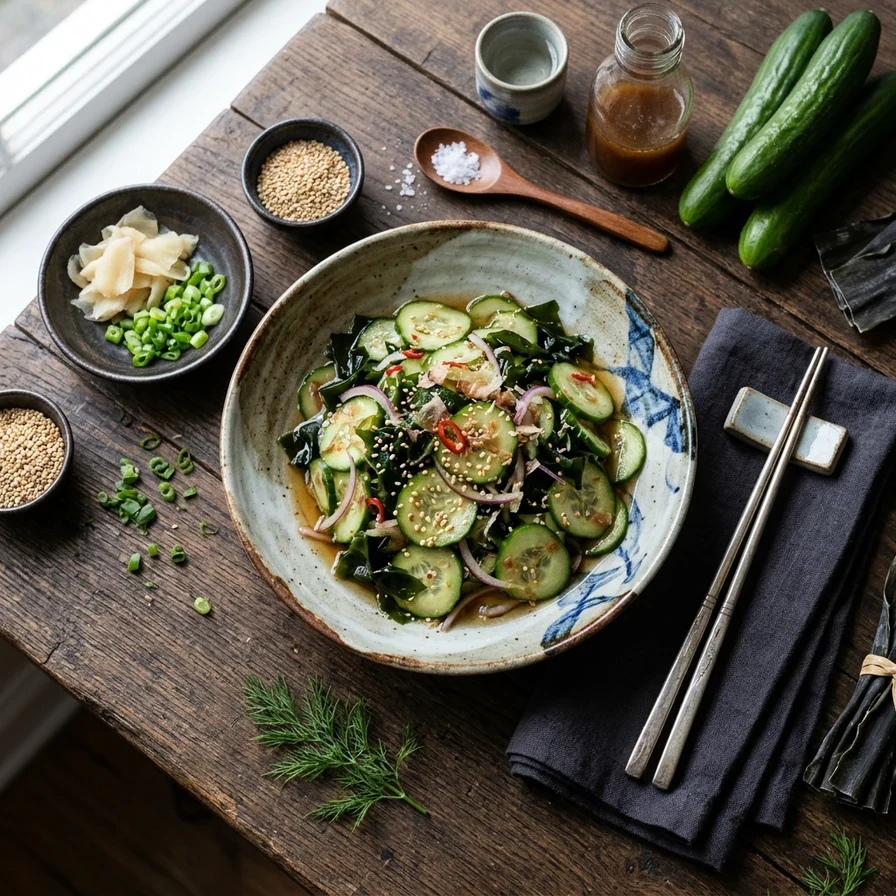
Sunomono cucumber salad recipe is a Japanese vinegared cucumber dish made with thinly sliced cucumbers, rice vinegar, soy sauce, sugar, and sesame seeds, ready in under 20 minutes. The cucumbers are salted first to draw out excess moisture, then tossed in a sweet-tangy dressing that clings to every paper-thin slice. This no-cook recipe serves 2–4 people and delivers a crisp, briny bite that cuts through rich main dishes perfectly.
The dressing ratio — roughly 3 tablespoons rice vinegar to 1 tablespoon soy sauce and 1 tablespoon sugar — creates a sharp, clean flavor that is distinctly different from Western vinaigrettes. Each cucumber slice absorbs the pickling liquid in as little as 10 minutes, so the texture stays snappy rather than soggy. As a food blogger who has tested this dish a dozen times to nail that dressing balance, I can tell you the salting step is non-negotiable.
I first brought this to a weeknight dinner with my friend Priya, who kept reaching back into the bowl until it was completely gone — that reaction told me the recipe was ready to share.
Table of Contents
- What Makes This Japanese Cucumber Salad So Special?
- What Ingredients Do You Need for This Dish?
- How Do You Make It Step by Step?
- Frequently Asked Questions
- Expert Tips and Pro Shortcuts
- What to Serve With It?
- Common Mistakes to Avoid
- Easy Ingredient Swaps and Substitutions
What Makes This Japanese Cucumber Salad So Special?
Sunomono cucumber salad recipe stands out because it transforms a simple vegetable into a vibrant, palate-cleansing side dish in under 20 minutes using a short list of pantry staples. The rice vinegar base delivers mild acidity without harshness, the soy sauce adds umami depth, and the sugar rounds everything into a balanced dressing that feels intentional rather than thrown together. It requires zero cooking and minimal cleanup.
- No heat required: The entire dish comes together without turning on the stove. This makes it a practical choice on warm evenings when you want a fresh side without adding heat to the kitchen.
- Ready in 15–20 minutes: The active prep time is about 10 minutes, and the cucumbers only need 5–10 minutes to marinate. You can have it on the table before your main dish finishes cooking.
- Naturally low in calories: One serving contains primarily water-rich cucumber and a small amount of seasoned vinegar dressing. It adds volume and brightness to a meal without weighing it down.
- Pairs with a wide range of mains: The sharp acidity works as a counterbalance to fatty proteins like salmon, teriyaki chicken, or fried tofu. If you enjoy exploring Japanese-style sides, check out this traditional Japanese cucumber salad for more inspiration on the classic preparation.
What Ingredients Do You Need for This Dish?
This recipe uses thinly sliced English or Japanese cucumbers as the base, dressed in a mixture of rice vinegar, soy sauce, and sugar, then finished with toasted sesame seeds and optional wakame seaweed. Every ingredient serves a specific textural or flavor purpose, and most are available at any standard grocery store or Asian market.
- 2 medium English cucumbers (or 4–5 Japanese cucumbers)
- 1 teaspoon fine sea salt (for drawing out moisture)
- 3 tablespoons rice vinegar
- 1 tablespoon soy sauce
- 1 tablespoon granulated sugar
- 1 teaspoon sesame oil
- 1 tablespoon toasted sesame seeds
- 2 tablespoons dried wakame seaweed (optional, rehydrated)
- ½ teaspoon freshly grated ginger (optional)
Rice vinegar is the backbone of the dressing — its lower acidity (around 4–5% compared to white vinegar’s 5–8%) keeps the flavor gentle and allows the cucumber’s natural taste to come through. Sesame oil, used in a small quantity, adds a nutty aromatic note that ties the whole dressing together without overpowering the other elements.
How Do You Make It Step by Step?
Making this dish involves four core actions: slicing the cucumbers thin, salting and draining them, whisking the dressing, and tossing everything together to marinate briefly. The full process takes about 15–20 minutes from start to finish and requires only a cutting board, a knife, a mixing bowl, and a small whisk or fork.
Step 1 — Slice the Cucumbers
Using a sharp knife or a mandoline set to 1–2mm thickness, slice the cucumbers into thin rounds. Thin, even slices are essential because they absorb the dressing uniformly and create that signature delicate texture rather than chunky bites.
Step 2 — Salt and Drain
Place the cucumber slices in a colander or bowl, sprinkle with 1 teaspoon of fine sea salt, and toss to coat. Let them sit for 5–7 minutes, then squeeze out the excess water firmly with your hands or press with a clean kitchen towel. This step removes up to 30% of the cucumber’s water content, preventing a watery dressing.
Step 3 — Rehydrate the Wakame (If Using)
Place 2 tablespoons of dried wakame in a small bowl and cover with cold water for 5 minutes until it expands and softens. Drain and squeeze out the excess water before adding it to the salad. Wakame adds a subtle oceanic flavor and a slippery texture that contrasts nicely with the crisp cucumber.
Step 4 — Whisk the Dressing
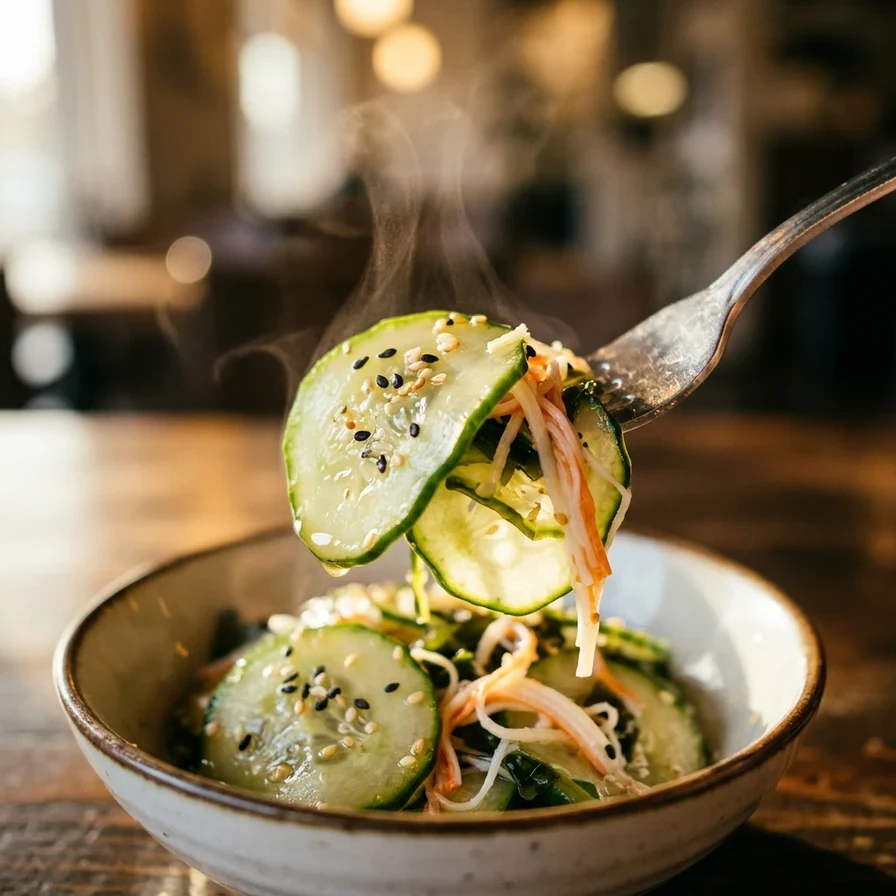
In a small bowl, combine 3 tablespoons rice vinegar, 1 tablespoon soy sauce, 1 tablespoon sugar, 1 teaspoon sesame oil, and grated ginger if using. Whisk until the sugar fully dissolves, which takes about 30 seconds. Taste the dressing at this stage — it should be sharp, slightly sweet, and savory all at once.


Step 5 — Toss and Marinate
Add the drained cucumbers and wakame to the dressing and toss thoroughly to coat every slice. Let the mixture sit for at least 5 minutes at room temperature so the cucumbers absorb the dressing flavor. I tested marinating times from 5 to 30 minutes and found 10 minutes hits the sweet spot — long enough for flavor without losing crunch.
Step 6 — Garnish and Serve
Transfer the salad to serving bowls and sprinkle with 1 tablespoon of toasted sesame seeds just before serving. Serve immediately or refrigerate for up to 2 hours — after that, the cucumbers continue releasing water and the texture softens significantly. A small pinch of togarashi or chili flakes on top adds a gentle heat if you prefer a spicier finish.
Frequently Asked Questions
Can I make sunomono ahead of time?
You can prepare the dressing and slice the cucumbers up to 24 hours ahead, but keep them separate until 10 minutes before serving. Once combined, the salad is best within 2 hours before the cucumbers become too soft from the vinegar.
What type of cucumber works best for this recipe?
Japanese cucumbers or English cucumbers work best because they have thin skins, fewer seeds, and lower water content than regular slicing cucumbers. Persian cucumbers are a close second. Avoid standard garden cucumbers — their thick skin and large seeds create an unpleasant texture.
Is this recipe gluten-free?
Standard soy sauce contains wheat, making the recipe not gluten-free by default. Swap regular soy sauce for tamari or coconut aminos in a 1:1 ratio to make it fully gluten-free with no noticeable flavor difference.
Why do my cucumbers turn watery?
Cucumbers release water when exposed to salt or acid. Skipping the salting-and-draining step is the most common cause of a watery result. Salt the slices for at least 5 minutes and squeeze firmly before adding the dressing to prevent dilution.
How long does sunomono keep in the refrigerator?
Once dressed, the salad keeps for up to 2 hours in the refrigerator with acceptable texture. After that, the cucumbers become noticeably limp. Store undressed cucumber slices separately for up to 24 hours if you need to prep ahead.
Expert Tips and Pro Shortcuts
Use a mandoline for slicing if you have one — consistent 1mm slices marinate evenly and create the elegant look that makes this dish visually appealing on the table. Irregular cuts lead to uneven texture, with some pieces over-pickled and others under-seasoned.
Toast your sesame seeds in a dry skillet over medium heat for 2–3 minutes, stirring constantly, until golden. Pre-toasted seeds from a bag are often stale and contribute little aroma compared to freshly toasted ones, which release their oils when warm and add a noticeably nuttier flavor.
Dissolve the sugar in the vinegar before adding any other ingredient — sugar dissolves more efficiently in an acidic liquid at room temperature than it does once oil is introduced. This small order-of-operations change takes 10 extra seconds and gives you a smoother, fully integrated dressing.
Taste the dressing before it touches the cucumber, then adjust by adding sugar in ¼-teaspoon increments if too sharp, or a few extra drops of soy sauce if too flat. Developing that habit of pre-tasting the dressing means you never end up with an off-balance final dish.
What to Serve With It?
This salad pairs naturally alongside grilled salmon or teriyaki chicken because the vinegar-forward dressing cuts through fatty proteins and refreshes the palate between bites. The acidity acts as a functional counterweight rather than just a side element.
Serve it alongside a bowl of steamed white rice and miso soup for a simple, complete Japanese-style meal. The clean flavor of the cucumber salad keeps the meal from feeling heavy, even when the other components are substantial.
It also works well as a starter before sushi or ramen, functioning similarly to how a lemon sorbet works as a palate cleanser between courses in Western dining. A small 2–3 ounce portion is enough to reset the palate without filling guests up before the main event.
For a party spread, serve the salad in individual small cups or ramekins so guests can grab a portion without needing utensils. This presentation keeps the dish looking intentional and makes it easy to pair with chopstick-friendly items on the same table.
Common Mistakes to Avoid
Skipping the salting step is the single most common error and the one that causes the most disappointment. Without drawing out excess moisture first, the cucumbers release water directly into the dressing within minutes, diluting the flavor from a sharp, concentrated vinegar punch to a bland, watery liquid.
Using too much sesame oil throws off the entire flavor balance. One teaspoon is the correct amount for this volume of dressing — more than that and the oil overpowers the vinegar, making the salad taste heavy and greasy rather than bright and clean. Measure precisely rather than free-pouring from the bottle.
Adding the sesame seeds too early causes them to become soggy and lose their crunch within minutes of contact with the dressing. Always add sesame seeds as the very last step, immediately before serving, so they retain their toasted texture and visual appeal on top of the salad.
Easy Ingredient Swaps and Substitutions
If rice vinegar is unavailable, apple cider vinegar works as a substitute in the same 3-tablespoon quantity. Apple cider vinegar has a slightly more pronounced fruity tartness than rice vinegar, so the dressing will taste a touch sharper — balance it by adding an extra ¼ teaspoon of sugar.
Wakame seaweed can be replaced with thinly sliced radishes if you want to keep the visual color contrast without the oceanic flavor. Radishes add a peppery bite and a satisfying crunch that complements the cucumber without changing the overall character of the dish significantly.
For a sesame-free version, replace sesame oil with a neutral oil like avocado oil and swap sesame seeds with finely chopped scallion greens. You lose the nutty aromatic note but gain a fresh, oniony brightness that works equally well in the overall flavor profile of this cucumber salad.
Loved this recipe? Save it to your favorite Pinterest board so you can easily find it later! ✨