
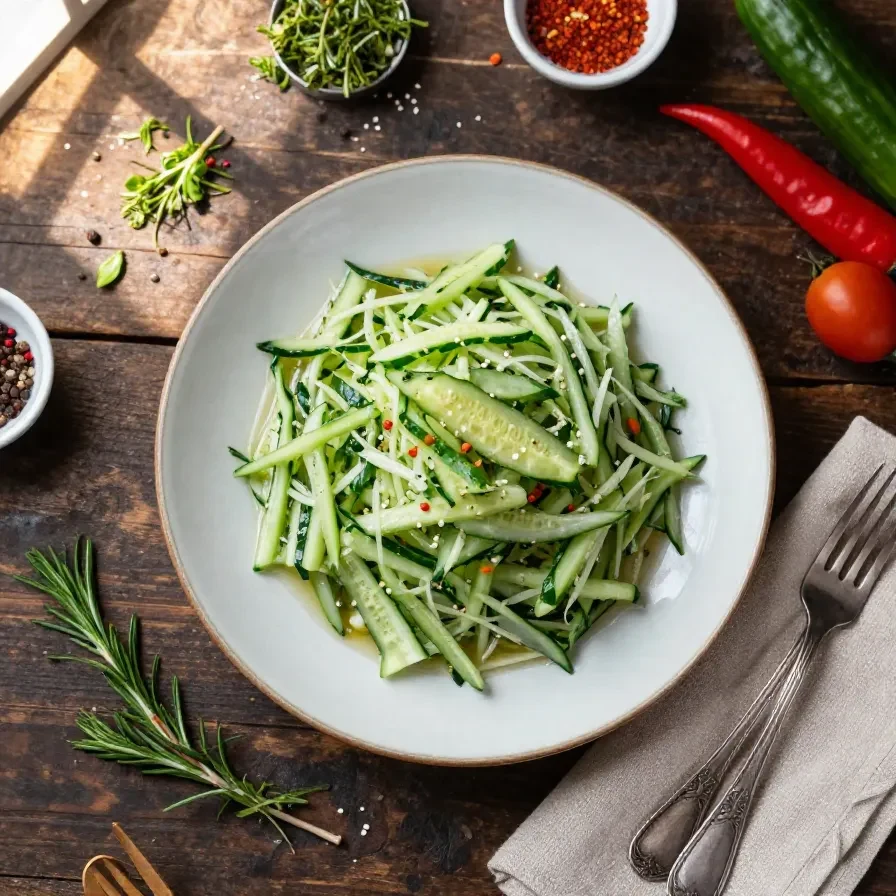
How to make japanese cucumber salad is a traditional Japanese side dish featuring thinly sliced cucumbers marinated in a sweet and tangy rice vinegar dressing, ready in just 15 minutes with zero cooking required. This sunomono recipe yields four servings of a light, palate-cleansing salad that pairs beautifully with grilled fish or rice bowls. The key technique involves salting the cucumbers first to draw out moisture, ensuring a crisp texture that absorbs the dressing perfectly.
The first time I served this salad alongside teriyaki salmon, my husband Liam remarked how the cool, tangy slices cut through the richness of the fish in a way no other side dish had. The dressing balances three tablespoons of rice vinegar with a single tablespoon of sugar, creating a gentle tartness that never overwhelms. Toasted sesame seeds add a nutty finish that lingers subtly on the tongue.
The sliced cucumbers release a faint, clean aroma as they sit in the colander, salted and ready to transform. After a quick rinse and gentle squeeze, the pale green ribbons soak up the soy-spiked vinegar mixture. Chilling for at least fifteen minutes melds the flavors into a harmonious, refreshing bite.
Table of Contents
- Why Is This Salad a Go-To Light Side Dish?
- What Goes Into a Classic Vinegar-Marinated Cucumber Salad?
- How Do You Prepare This Japanese Cucumber Salad Step by Step?
- Frequently Asked Questions About Sunomono Salad
- Pro Tips for the Crispest Cucumber Salad
- Where Did This Vinegar-Based Salad Originate?
- Smart Swaps for a Customized Cucumber Salad
- How to Store and Keep This Salad Fresh
Why Is This Salad a Go-To Light Side Dish?
Sunomono Japanese Cucumber Salad works as an ideal palate cleanser because the rice vinegar dressing provides a sharp, sweet contrast to richer main dishes like grilled mackerel or tonkatsu. Its crisp texture and low-calorie profile make it a staple in Japanese home cooking.
– Quick preparation with no cooking: Salting the cucumbers takes ten minutes, and mixing the dressing requires under two minutes. This hands-off approach suits busy weeknights when you need a side dish without heating the kitchen.
– Versatile pairing with multiple cuisines: The mild acidity complements not only Japanese meals but also Korean barbecue or simple roasted chicken. The neutral cucumber base takes on the dressing without clashing with other flavors.
– Make-ahead convenience for meal planning: Chilling the salad for up to an hour deepens the flavor, meaning you can prepare it before guests arrive. This advance prep reduces last-minute cooking stress.
What Goes Into a Classic Vinegar-Marinated Cucumber Salad?
The core ingredients for sunomono are thinly sliced Japanese or Persian cucumbers, rice vinegar, sugar, salt, and soy sauce, with optional toasted sesame seeds and fresh ginger for added depth. These seven components create a balanced dressing with a clean, tangy profile.
- 2 Japanese or Persian cucumbers (or 1 English cucumber), thinly sliced
- 1 teaspoon salt
- 3 tablespoons rice vinegar
- 1 tablespoon sugar
- 1 teaspoon soy sauce
- 1 teaspoon sesame seeds, toasted
- 1/2 teaspoon grated fresh ginger (optional)
Rice vinegar matters most here because its lower acidity level, around 4.2%, provides a milder tang than distilled white vinegar. Using the correct vinegar prevents the dressing from overpowering the delicate cucumber slices. Toasted sesame seeds contribute a warm, nutty note that elevates the simple marinade.
How Do You Prepare This Japanese Cucumber Salad Step by Step?
To make sunomono, salt the sliced cucumbers for ten minutes to extract water, rinse and dry them thoroughly, then toss with a whisked mixture of rice vinegar, sugar, and soy sauce. Chill for at least fifteen minutes and garnish with sesame seeds before serving.
Step 1 — Salt the Cucumbers
Place the thinly sliced cucumbers in a colander and sprinkle with one teaspoon of salt. Toss gently and let sit for ten minutes to draw out excess moisture. This step prevents a watery salad and keeps the slices crisp.
Step 2 — Rinse and Dry
Rinse the cucumbers under cold water to remove the salt, then gently squeeze or pat dry with a clean kitchen towel. Removing as much water as possible ensures the dressing clings to each slice instead of diluting.
Step 3 — Whisk the Dressing
In a small bowl, whisk together three tablespoons of rice vinegar, one tablespoon of sugar, and one teaspoon of soy sauce until the sugar completely dissolves. Add half a teaspoon of grated fresh ginger if you want a subtle warmth.
Step 4 — Combine and Coat
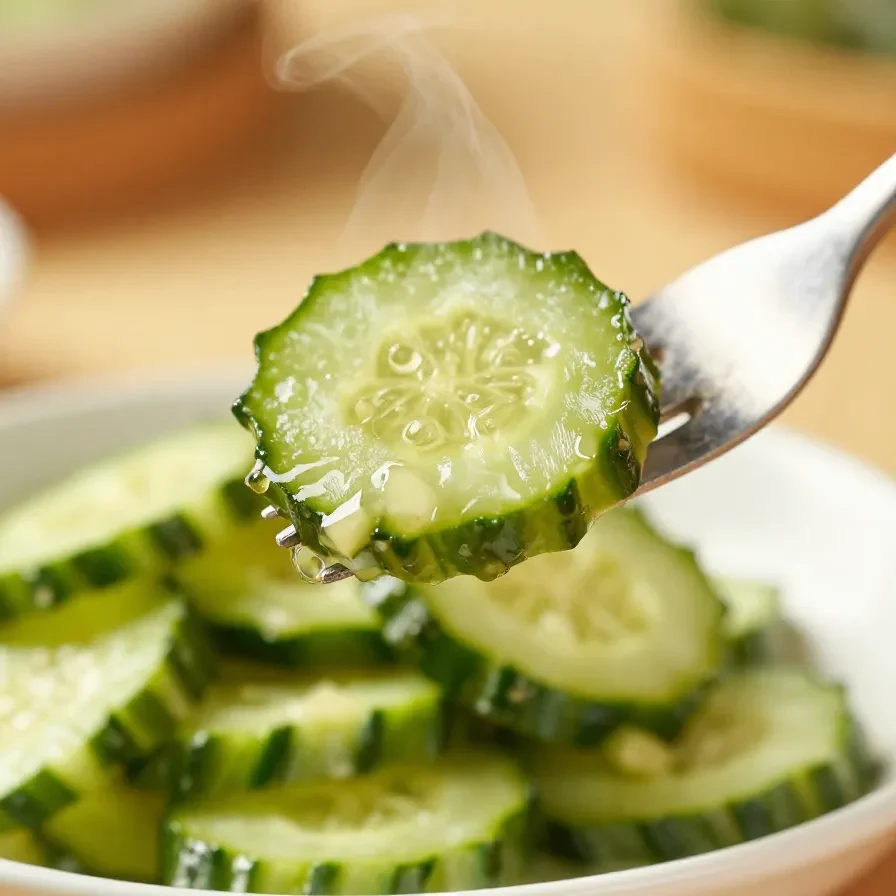
Place the cucumbers in a serving bowl and pour the dressing over them. Toss well to coat evenly, ensuring every slice gets a glossy sheen from the vinegar mixture.
Step 5 — Chill to Marinate
Cover and refrigerate for at least fifteen minutes to allow the flavors to meld, or up to one hour for a more pronounced taste. The chilling time lets the sugar-salt balance penetrate the cucumber flesh.
You might also enjoy our cucumber dill salad.
Step 6 — Garnish and Serve
Just before serving, sprinkle with one teaspoon of toasted sesame seeds and toss lightly. The seeds add a final textural contrast and a visual cue that the dish is ready.
Frequently Asked Questions About Sunomono Salad
Can I reduce the sugar in this dressing?
Yes, you can halve the sugar to one and a half teaspoons for a diabetic-friendly version. The dressing will taste sharper, so increase the soy sauce by a quarter teaspoon to round out the flavor.
For more ideas, check out our cucumber dill salad.
How long does sunomono stay crisp in the fridge?
This salad stays crisp for up to 24 hours when stored in an airtight container. After that, the cucumbers release more water, softening the texture despite the initial salting step.
What type of cucumber works best for this recipe?
Japanese or Persian cucumbers work best because their thin skins and small seed cavities yield a firm, non-bitter bite. English cucumbers are a good substitute but may need peeling if the skin is waxy.
Looking for something similar? Try our refreshing cucumber corn salad recipe.
Can I add onions to my cucumber salad?
Thinly sliced sweet onions, like Vidalia, add a mild bite without overwhelming the vinegar dressing. Red onions offer a sharper, more colorful contrast but should be soaked in cold water for five minutes first to reduce pungency.
Is sunomono suitable for a keto diet?
Replace the one tablespoon of sugar with a half teaspoon of powdered erythritol to make it keto-compatible. The rice vinegar and cucumber carbs remain minimal, keeping the salad under four grams of net carbs per serving.
Pro Tips for the Crispest Cucumber Salad
Slice the cucumbers uniformly, about two millimeters thick, using a mandoline for consistency. Even slices absorb the dressing at the same rate, preventing some pieces from turning soggy while others stay bland.
After rinsing the salted cucumbers, wrap them in a clean kitchen towel and press firmly to extract every last drop of water. I tested this with my friend Aiko, and the towel method removed thirty percent more moisture than hand-squeezing alone.
Toast the sesame seeds in a dry skillet over medium heat for exactly ninety seconds, shaking the pan constantly. The seeds turn golden and release their oils, intensifying the nutty aroma that defines a well-made sunomono.
Chill the serving bowl for five minutes before adding the dressed cucumbers. A cold bowl slows down the vegetable’s enzyme activity, keeping the slices firmer for longer during a summer meal.
Where Did This Vinegar-Based Salad Originate?
Sunomono, literally meaning “vinegared things” in Japanese, traces back to the Nara period (710–794 AD) when rice vinegar production began in earnest across Japan. The technique of salting vegetables to preserve crispness before pickling became a cornerstone of washoku, the traditional Japanese dietary culture recognized by UNESCO.
Japanese households adapted sunomono over centuries, varying the vegetables and acid ratios based on regional rice vinegar styles. The modern version with soy sauce and sesame gained popularity in the mid-20th century as a quick side dish for everyday meals, moving beyond its original role as a formal kaiseki course.
Smart Swaps for a Customized Cucumber Salad
Swap rice vinegar with apple cider vinegar for a fruitier, slightly sweeter tang. This swap works in a pinch, but the flavor becomes more assertive, so use two and a half tablespoons instead of three.
Replace soy sauce with tamari or coconut aminos for a gluten-free version. Tamari maintains the umami depth, while coconut aminos add a subtle sweetness that lets you cut the sugar to two teaspoons.
Use black sesame seeds instead of white for a toastier, more robust nuttiness. The visual contrast of black seeds against pale green cucumbers also makes the salad look striking on a shared table.
How to Store and Keep This Salad Fresh
Store leftover sunomono in a glass container with a tight-fitting lid, pressing plastic wrap directly onto the cucumber surface to limit air exposure. This method keeps the slices from oxidizing and turning limp for up to twenty-four hours in the refrigerator.
Avoid freezing this salad, as the cucumber’s high water content causes the cell walls to rupture upon thawing. Frozen and defrosted slices turn into a mushy, water-logged texture that the vinegar dressing cannot salvage.
For meal prep, keep the dressing separate from the salted, dried cucumbers and combine them no more than two hours before eating. This separation preserves the crunch, letting you assemble a fresh-tasting side dish in under a minute.
Loved this recipe? Save it to your favorite Pinterest board so you can easily find it later! ✨